Primal Grow Pro Official Website › Guide
GuideThe Male Vitality Supplement Guide
One combination has ever come first in a network meta-analysis of this category, and it contained a prescription drug.
Two carnitines at gram quantities plus sildenafil. No other supplement regimen in that analysis reached significance, and a separate scoring of twenty-five marketed products placed twenty of them in a group with no expected efficacy.
Written for somebody who will read it and buy nothing.
What is actually in a male vitality supplement?
Four families of ingredient, and what each one is there to imply.
The aisle looks varied and is not. Almost every product in it draws from four families of ingredient, and knowing which family a bottle is built from tells you more in ten seconds than the front label will in a minute.
| Family | Typical members | What the family is proposed to do |
|---|---|---|
| Amino acids and their derivatives | L-arginine, L-citrulline, L-carnitine, L-glutamine | Feed the nitric oxide pathway, or in carnitine’s case move fatty acids into the mitochondria. The most biochemically specific family of the four. |
| Botanical adaptogens and tonics | Tongkat ali, maca, ashwagandha, tribulus, fenugreek, ginseng | The family that implies a hormonal effect without usually claiming one. Almost every product marketed on testosterone is built here. |
| Circulatory and cognitive botanicals | Ginkgo biloba, bacopa monnieri, horny goat weed | Blood flow and mental function, which is where a “vitality” product reaches when it wants to describe something other than hormones. |
| Vitamins, minerals and synthesised compounds | Zinc, vitamin D, magnesium, boron, vinpocetine | Correcting a deficiency, in the first three cases, or a pharmacological effect in the last, which is a different proposition wearing the same label. |
Four families. A product is usually built almost entirely from one or two of them, and the mixture tells you what story it intends to tell.
Two practical consequences follow. The first is that two products with completely different ingredient lists can be selling exactly the same idea, and two products with overlapping lists can be selling different ones.
The second is that the fourth family is the one to read most carefully. A synthesised compound sold as a supplement is a pharmacological agent with a supplement’s labelling requirements, which is a combination worth noticing before it is swallowed.
The one result in this category that reached significance
One meta-analysis, one trial, and the amounts both of them used.
Start here, because everything else in this guide is a footnote to it.
A 2024 systematic review and network meta-analysis pooled fifteen randomised trials in roughly a thousand men and ranked every supplement regimen it could find for erectile function. One combination came first. It was propionyl-L-carnitine plus acetyl-L-carnitine plus sildenafil, and no other regimen in the analysis reached statistical significance.
Read that winner carefully. Two carnitines at gram quantities, and a prescription phosphodiesterase inhibitor. The supplement component of the best-performing intervention in this entire literature was an add-on to a drug.
There is a second study that belongs immediately beside it, and it is the one with the clean supplement-only result. A 2004 trial in 120 men aged 60 to 74 gave two grams of propionyl-L-carnitine plus two grams of acetyl-L-carnitine daily for six months, against testosterone undecanoate and against placebo. Both active arms beat placebo on sexual function, mood and fatigue, and the carnitine arm did it without the prostate changes seen in the testosterone arm.
Four grams a day, two named forms, six months. That is what the best supplement result in this category cost, and it is the benchmark any bottle on a shelf is being measured against whether it knows it or not.
What happens when somebody scores the actual products
Twenty-five products, scored, and where twenty of them landed.
The gap between ingredient research and finished products is the central fact about this aisle, and it has been measured directly.
A 2023 analysis in Nutrients took twenty-five marketed supplements for erectile dysfunction, scored them against the published evidence for their ingredients and the amounts they carried, and grouped them. Twenty of the twenty-five fell into a cluster the authors described as having no expected efficacy: blends of many substances at negligible quantities.
Eighty per cent. That figure is the single most useful number a shopper in this aisle can hold, and it does not describe any individual product on any shelf. It describes the base rate.
The mechanism behind it is not mysterious. A capsule holds a fixed volume. A formula with seven, ten or fifteen named ingredients has to divide that volume between them, and the arithmetic that follows is the reason a long ingredient list is a warning sign rather than a feature.
Three or four ingredients at amounts that match their research will always be a better proposition than twelve at amounts that cannot.
The claim this category makes that no evidence supports
What was actually measured in 15,521 men, and what advertising promises.
Advertising in this aisle regularly promises physical change measured in inches, over periods measured in weeks. It is worth setting that against what is actually known about the measurements in question.
A systematic review published in BJU International constructed nomograms from measurements taken by health professionals in up to 15,521 men. Mean stretched length came out at 13.24 centimetres with a standard deviation of 1.89, and mean erect length at 13.12 centimetres with a standard deviation of 1.66.
Those figures are the distribution. An advertisement promising three inches of change in thirty days is promising to move a man roughly four standard deviations through it, from a capsule, in a month.
No trial of any oral supplement ingredient has demonstrated any change in that measurement. There is no result to cite here because there is no result, and a guide that hedged this would be less honest than one that says so plainly.
That is also why the product this website sells names four supports and none of them is a physical measurement. The claims that circulate in advertising around products in this aisle are frequently not the claims the seller’s own label language makes.
How to read a label in this aisle in ninety seconds
Five steps in order, the last of which sounds backwards and is not.
Count the ingredients, then divide
A size 0 capsule holds roughly 500 to 800 milligrams of powder. Fifteen ingredients in one capsule is an average of forty milligrams each before any excipient is counted, and almost nothing in this category has been studied at forty milligrams.
Find the largest studied amount on the list
Carnitine research runs in grams. Ginkgo runs at 240 milligrams a day, bacopa at 300 and above. If an ingredient with a gram-scale literature appears on a multi-ingredient capsule, the arithmetic is settled before you read anything else.
Check whether the amounts are printed at all
A proprietary blend line groups several ingredients under one combined weight. A label with no ingredient table at all goes further. Both leave a reader unable to compare the product against the research its ingredient names borrow from.
Look for the form, not just the name
Carnitine comes in at least four forms and the trial that matters used two specific ones. Ginkgo research runs almost entirely on one standardised extract. A name without a form is a name.
Read the refund terms before the ingredient list
It sounds backwards and it is the most practical step here. A window long enough to test the product, with a route to use it, is the one thing on a sales page that can be verified before spending anything. The NCCIH's general guidance makes the same point in broader terms.
Five steps, ninety seconds, and they will eliminate most of the aisle. What they will not do is tell you whether the survivor works, because no label can carry that information and no amount of careful reading can extract it.
When this is not a shopping problem
What to rule out before shopping, and why it is worth ruling out anyway.
A guide to a supplement category has an obligation to say when the category is the wrong aisle, and this is that section.
MedlinePlus sets out the causes of erectile difficulty in plain language, and the list is worth reading once by anybody who arrived at this subject through a search rather than through curiosity. Vascular disease, diabetes, medication side effects, hormonal conditions and depression all appear on it.
Several of those are worth identifying for reasons that have nothing to do with sexual function. Erectile difficulty is sometimes the first noticeable sign of a vascular problem, which makes it a symptom with information in it rather than only an inconvenience.
None of that means a supplement is a bad idea. It means the order of operations matters: find out what is going on first, then decide what to take, rather than spending three months on a capsule while the actual cause goes unexamined.
The basics belong in the same sentence. Sleep, alcohol, activity and bodyweight move everything this category sells, they move it further than any capsule in the aisle, and they cost nothing.
Sources for this guide
Ten references, every one confirmed against its own published record.
- Barbonetti A, Tienforti D, Antolini F, et al. Nutraceutical interventions for erectile dysfunction: a systematic review and network meta-analysis. J Sex Med. 2024;21(11):1054-1063. PMID 39279185. https://pubmed.ncbi.nlm.nih.gov/39279185/
- Petre GC, Francini-Pesenti F, Vitagliano A, et al. Dietary Supplements for Erectile Dysfunction: Analysis of Marketed Products, Systematic Review, Meta-Analysis and Rational Use. Nutrients. 2023;15(17):3677. PMID 37686709. https://pubmed.ncbi.nlm.nih.gov/37686709/
- Cavallini G, Caracciolo S, Vitali G, et al. Carnitine versus androgen administration in the treatment of sexual dysfunction, depressed mood, and fatigue associated with male aging. Urology. 2004;63(4):641-6. PMID 15072869. https://pubmed.ncbi.nlm.nih.gov/15072869/
- Gentile V, Vicini P, Prigiotti G, et al. Preliminary observations on the use of propionyl-L-carnitine in combination with sildenafil in patients with erectile dysfunction and diabetes. Curr Med Res Opin. 2004;20(9):1377-84. PMID 15383186. https://pubmed.ncbi.nlm.nih.gov/15383186/
- Tucker J, Fischer T, Upjohn L, et al. Unapproved Pharmaceutical Ingredients Included in Dietary Supplements Associated With US Food and Drug Administration Warnings. JAMA Netw Open. 2018;1(6):e183337. PMID 30646238. https://pubmed.ncbi.nlm.nih.gov/30646238/
- Veale D, Miles S, Bramley S, et al. Am I normal? A systematic review and construction of nomograms for flaccid and erect penis length and circumference in up to 15,521 men. BJU Int. 2015;115(6):978-86. PMID 25487360. https://pubmed.ncbi.nlm.nih.gov/25487360/
- MedlinePlus. Erectile Dysfunction. Bethesda (MD): U.S. National Library of Medicine, National Institutes of Health. https://medlineplus.gov/erectiledysfunction.html
- Using Dietary Supplements Wisely. National Center for Complementary and Integrative Health, National Institutes of Health. https://www.nccih.nih.gov/health/using-dietary-supplements-wisely
- Hort J, Duning T, Hoerr R. Ginkgo biloba Extract EGb 761 in the Treatment of Patients with Mild Neurocognitive Impairment: A Systematic Review. Neuropsychiatr Dis Treat. 2023;19:647-660. PMID 36994422. https://pubmed.ncbi.nlm.nih.gov/36994422/
- Kongkeaw C, Dilokthornsakul P, Thanarangsarit P, et al. Meta-analysis of randomized controlled trials on cognitive effects of Bacopa monnieri extract. J Ethnopharmacol. 2014;151(1):528-35. PMID 24252493. https://pubmed.ncbi.nlm.nih.gov/24252493/
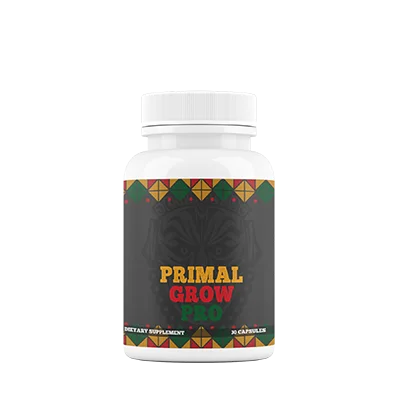
Apply the seven checks to Primal Grow Pro
The companion guide scores this product against its own scorecard, and it fails four of the seven rows.
Seven checks · about a minute each · 60-day money-back guarantee
Order Primal Grow Pro On The Official WebsiteOne capsule a day · 30 per bottle · lot PRI-26/TH-6374