Primal Grow Pro Official Website › Choosing
ChoosingChoosing A Male Vitality Supplement
Seven questions, each answerable in about a minute, that you can carry to any label.
Are the amounts printed? Is the ingredient list consistent? Is the extract form named? Are interactions flagged? Is there a refund route? Do the marks name anybody? Is the price stated plainly? The product on this website passes two and fails four.
A scorecard, then the bottle this website sells scored against it in public.
The seven checks
Seven questions, each answerable in about a minute, in the order worth asking them.
1. Is an amount printed for every named ingredient?
The first question and the one that eliminates most of the aisle. A label that names ten ingredients and prints ten weights can be compared against the published research one row at a time. A proprietary blend line, which groups several under one combined weight, cannot. A label with no ingredient table at all goes further still. The 2023 analysis that scored 25 products in this category could sort them at all only because most of them printed something.
2. Is the ingredient list the same everywhere the seller states it?
Check the bottle, the sales page and any ingredient graphic against each other. They should name the same things in the same order. Where they do not, the difference is the seller’s own materials disagreeing about what is in the product, and no amount of reading resolves it from outside.
3. Is the form or standardisation of each ingredient named?
Several of the ingredients in this aisle exist in more than one chemical shape, and the published work was done on a particular one each time. A serious ginkgo result belongs to a specific standardised extract; a bacopa result belongs to a stated bacoside content. A bare plant name on a label leaves that variable open, and it is frequently the variable that decided the trial.
4. Does the seller name the interactions its own ingredient list carries?
Some ingredients carry documented interactions, and St. John’s wort is the clearest example in ordinary retail supply: the review that catalogues them runs to transplant medicines, anticoagulants, antiretrovirals and hormonal contraceptives. A seller that names the ingredient has met the minimum. One that also flags what it interacts with has done the thing that protects a buyer.
5. Is there a refund window, and a human route to use it?
Length matters less than the route. A sixty-day window with a telephone number answered by a person is worth more than ninety days behind a contact form. This is also the only claim on a sales page that a reader can test before spending anything, by ringing the number and seeing who answers.
6. Do the compliance marks name a certifying body?
A badge wall is a design element unless the badges carry a name, a certificate number or a date. Ask of each mark: could I follow this to a source? For most badge walls in this aisle the answer is no for every mark on the wall, and knowing that is what stops a wall of them from doing work it has not earned.
7. Is the price stated plainly, without an invented comparison figure?
A struck price nobody ever paid, a countdown timer, a discount percentage that does not match the arithmetic. None of these tells you anything about the capsule and all of them tell you something about the seller. A price stated once, with what it covers, is the thing to look for, and the NCCIH's general guidance on buying supplements is five minutes well spent beside it.
The seven checks applied to Primal Grow Pro
Seven rows, two passes, and four failures stated without hedging.
| The check | Result | Why |
|---|---|---|
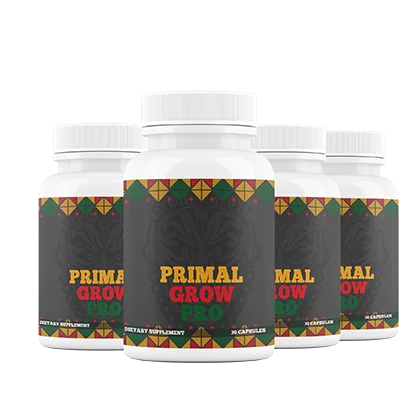
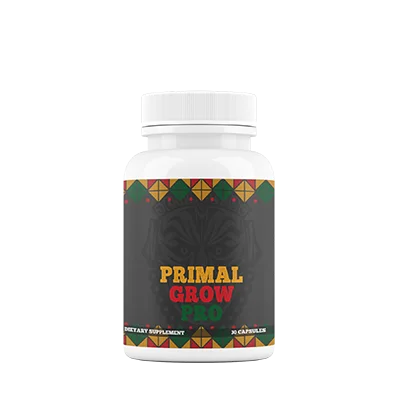
| 1. Amounts printed for every ingredient | Fails | The front label carries the wordmark, “Dietary Supplement”, “30 Capsules” and the FDA sentence. There is no ingredient table on the bottle, on either vendor graphic or on the seller’s page, so no row can be compared against any study. |
| 2. One ingredient list, stated consistently | Fails | The two vendor graphics draw six ingredients each and it is not the same six. “Inside” omits huperzine; “How It Works” omits St. John’s wort. The written copy names all seven. |
| 3. Form or standardisation named | Fails | Seven names and no extract, ratio or standardisation for any of them. The one piece of form detail the seller does give is the origin of the vinpocetine, which it attributes to Voacanga africana seeds. |
| 4. Interactions named by the seller | Partial | St. John’s wort is named on the ingredient list, which is the minimum and which a reader can act on. The seller does not flag what it interacts with. This website does, at length, on the side effects page. |
| 5. Refund window with a human route | Passes | 60 days from the date of purchase, opened bottles included, claimed by telephone on +1 (302) 200-3480. It is longer than most in this aisle and the route is a number rather than a form. |
| 6. Compliance marks naming a certifying body | Fails | Ten marks ship with the pack and not one names a body, a certificate number, an auditor or a date. The “Doctor Formulated” mark attaches to nobody a reader could look up. |
| 7. Price stated plainly | Passes | Three tiers, one payment each, no struck comparison price anywhere. The one blemish is a “50% Discount” badge on the four-bottle tier where the arithmetic gives 29%, and that is named on the pricing page rather than repeated. |
Two passes, one partial and four failures. The failures are all about what the seller publishes rather than about what is in the capsule, which is a distinction worth holding on to.
Four failures out of seven is a poor score and it is the honest one. It is also worth saying what it does not mean: none of those four rows is evidence that the capsule is ineffective, unsafe or misrepresented. Every one of them is about information the seller has chosen not to publish.
That distinction is the whole of the difference between a bad product and an opaque one, and from outside a bottle it is frequently the only distinction available.
The four failing rows, in detail
Four rows, what each one costs a buyer, and what it does not mean.
Check one, and why it decides the others
With no amount printed for anything, checks three and four become harder to assess and the whole comparison against published research becomes impossible in the direction that matters. This website works around it by setting the daily amount each ingredient was studied at beside the blank, which is the best available substitute and is not the same thing.
Ginkgo trials run at 240 mg a day. Bacopa’s at 300 and above. The carnitine work at four grams. Huperzine in micrograms. Seven of those in one capsule, once a day, and the reader is left to do arithmetic the label should have made unnecessary.
Check two, and what it actually costs
An ingredient list that varies between the seller’s own two graphics is not a small inconsistency, because the two ingredients involved are the two with the most consequential properties on the list. St. John’s wort carries the interactions and huperzine is the one measured in micrograms.
This website carries all seven, because the written copy and the distributor paperwork both name seven and because a drawing that omits an ingredient has not established its absence.
Check three, and the one thing the seller does specify
Seven names with no extract or standardisation is the ordinary state of affairs in this aisle rather than an outlier. It still fails the check, because the check is about what a careful buyer would want rather than about what is typical.
Credit where it is due: the seller does specify the botanical origin of its vinpocetine, which is more than the 2016 analysis found most vinpocetine sellers bothering with.
Check six, and why the wall is worse than one mark
A single unattributed badge is a decoration. Ten of them arranged as a wall is a design that borrows the appearance of accreditation without any of it being followable, and that is the finding rather than any individual mark being false.
The audit on testing and quality takes all ten one at a time. The gluten-free mark is the one whose claim the ingredient list itself supports; the “Natural Ingredients” mark sits on a formula whose fifth ingredient is synthesised.
The rows it passes, and why they are not consolation
Three rows answered, and the fourth point that does not appear on the card at all.
A scorecard that only reported failures would be as useless as one that only reported passes. Two of these rows are genuinely well answered and one is partially answered, and each of the three eliminates a real category of problem.
- The refund window is real and the route is a telephone number. 60 days from purchase with opened bottles included is at the longer end of this aisle, and it is the only mark on this pack a buyer can test before committing: ring +1 (302) 200-3480 and see who answers.
- The price is stated once, plainly, with no struck figure. No comparison price nobody paid, no countdown, no fabricated recommended retail price. One badge overstates a discount and the arithmetic correcting it is published on the pricing page.
- The interaction ingredient is named. A reader who knows what St. John’s wort is can act on the ingredient list as published. That is the minimum rather than good practice, and the minimum is more than a proprietary blend would have given.
- There is no acute-effect claim anywhere. Nothing here promises to work within the hour, which is the signal most associated with the undeclared-pharmaceutical problem described in the analysis of FDA warning letters. A formula that takes weeks is, in this one narrow respect, the safer proposition.
Those four points are worth as much as the four failures, because they are about different risks. The failures are about opacity. The passes are about conduct, and a seller that behaves well on price and refunds while publishing little is a different proposition from one that behaves badly on both.
Using the scorecard on something else
Four score bands, and what each one should change about the decision.
The card is worth more applied to a bottle this website does not sell, so here is how to run it in a shop or a browser tab in under ten minutes.
| Score | What it usually means | What to do |
|---|---|---|
| 6 or 7 passes | Rare. Judging by the products that have actually been scored, a label printing amounts, naming forms and carrying an attributable mark is in a small minority of this aisle. | Compare each printed amount against the research for that ingredient. That is the comparison the whole card exists to make possible. |
| 4 or 5 passes | A competent product with something specific left out, usually the extract form or the certification. | Ask the seller the one missing question in writing before a large order. |
| 2 or 3 passes | An opaque product that may still behave well commercially. This is where the product on this website sits. | Judge it on the passing rows, buy the smallest pack, and use the window. |
| 0 or 1 pass | No amounts, no consistency, no route to a human being and a struck price. | The refund row is the one that matters here. A product failing check five has nothing to test and nothing to recover. |
The card does not measure whether a product works, because no label can carry that information. It measures how much a buyer is being told.
One habit makes the whole thing stick. Write the seven down and answer them before reading the sales page, rather than after. A sales page is written to answer questions in an order that suits it, and the order above is the one that suits a buyer.
The NCCIH's general guidance on using supplements sensibly is worth five minutes alongside it.
What this scorecard cannot tell you
Four things seven passes would not establish.
- Whether a product works. Seven passes describes a label, not an effect. A perfectly transparent formula can be perfectly useless and say so in full detail.
- Whether a product is safe. The card asks whether interactions are named, not whether they exist. A bottle can pass check four and still be the wrong thing for a particular person.
- Whether what is printed is what is inside. An analysis of 23 vinpocetine supplements found quantities ranging over a hundredfold, and six bottles containing none of the labelled ingredient at all. A printed number is a declaration made at manufacture.
- Whether the price is fair. Check seven asks whether a price is stated honestly, which is a different question from whether it is good value.
Those four limits are the reason this card sits beside the evidence guide rather than instead of it. One tells you how much you are being told; the other tells you what the research supports. Neither is much use without the other.
Sources for this scorecard
Seven references, each behind a specific row of the card.
- Petre GC, Francini-Pesenti F, Vitagliano A, et al. Dietary Supplements for Erectile Dysfunction: Analysis of Marketed Products, Systematic Review, Meta-Analysis and Rational Use. Nutrients. 2023;15(17):3677. PMID 37686709. https://pubmed.ncbi.nlm.nih.gov/37686709/
- Barbonetti A, Tienforti D, Antolini F, et al. Nutraceutical interventions for erectile dysfunction: a systematic review and network meta-analysis. J Sex Med. 2024;21(11):1054-1063. PMID 39279185. https://pubmed.ncbi.nlm.nih.gov/39279185/
- Tucker J, Fischer T, Upjohn L, et al. Unapproved Pharmaceutical Ingredients Included in Dietary Supplements Associated With US Food and Drug Administration Warnings. JAMA Netw Open. 2018;1(6):e183337. PMID 30646238. https://pubmed.ncbi.nlm.nih.gov/30646238/
- Avula B, Chittiboyina AG, Sagi S, et al. Identification and quantification of vinpocetine and picamilon in dietary supplements sold in the United States. Drug Test Anal. 2016;8(3-4):334-43. PMID 26426301. https://pubmed.ncbi.nlm.nih.gov/26426301/
- Cavallini G, Caracciolo S, Vitali G, et al. Carnitine versus androgen administration in the treatment of sexual dysfunction, depressed mood, and fatigue associated with male aging. Urology. 2004;63(4):641-6. PMID 15072869. https://pubmed.ncbi.nlm.nih.gov/15072869/
- Nicolussi S, Drewe J, Butterweck V, et al. Clinical relevance of St. John's wort drug interactions revisited. Br J Pharmacol. 2020;177(6):1212-1226. PMID 31742659. https://pubmed.ncbi.nlm.nih.gov/31742659/
- Using Dietary Supplements Wisely. National Center for Complementary and Integrative Health, National Institutes of Health. https://www.nccih.nih.gov/health/using-dietary-supplements-wisely
Order Primal Grow Pro on the rows it passes, not the ones it fails
A 60-day window with a telephone number behind it, a price stated once, and one capsule a day. The four failing rows are about what the seller publishes, and they are on this page.
One bottle $69 · four bottles $196 · 60-day money-back guarantee
Order Primal Grow Pro On The Official WebsiteOne capsule a day · 30 per bottle · lot PRI-26/TH-6374