Primal Grow Pro Official Website › Blog › Medicine Questions
Why A Medication List Comes Before A Primal Grow Pro Order
With St. John’s wort, ginkgo and five other named ingredients on a label with no published quantities, a medication conversation belongs before the first capsule or the first checkout decision.
- The product is a one-capsule daily dietary supplement for adult men, not a treatment.
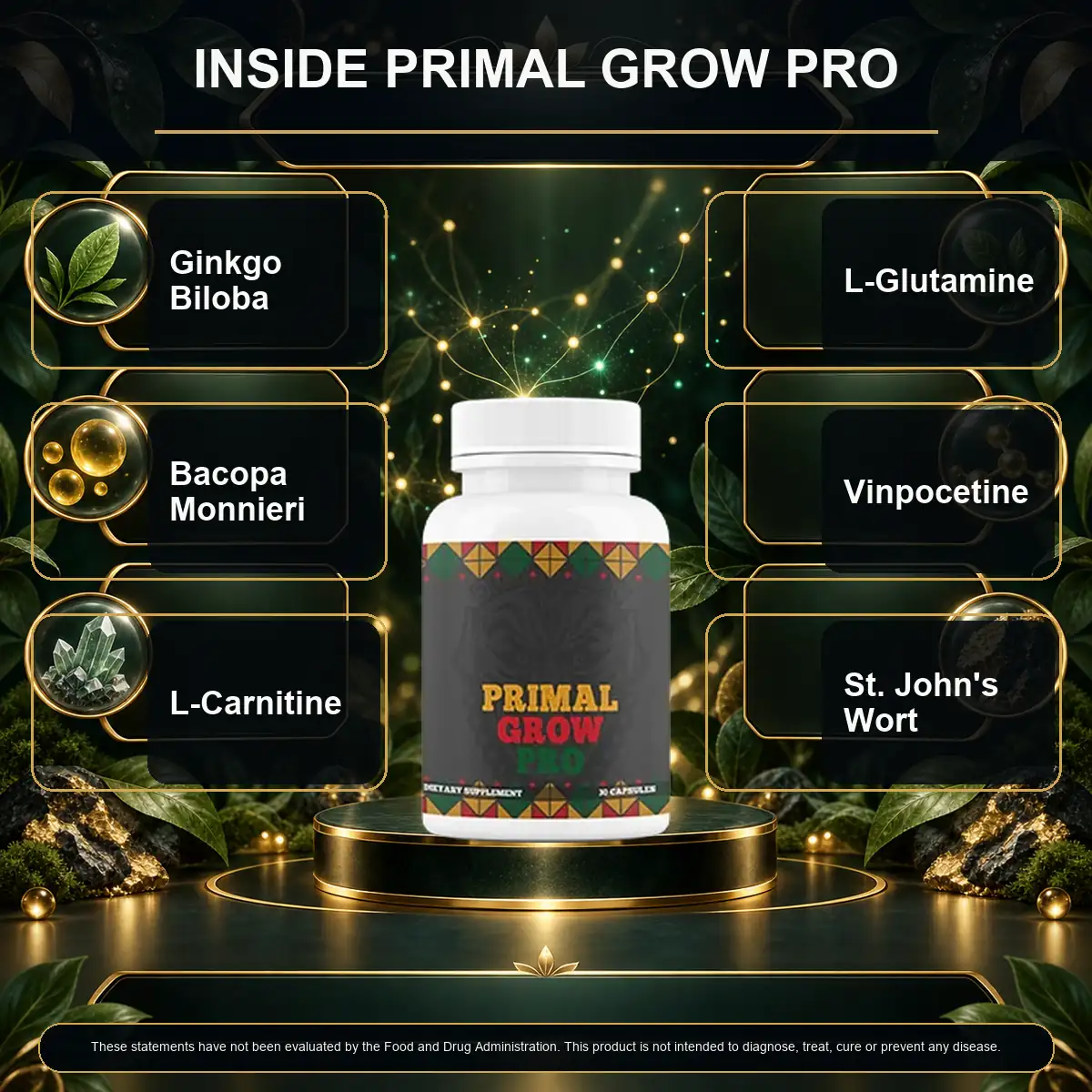
- Its seller names seven ingredients but does not publish an amount for any one of them.
- St. John’s wort and ginkgo make a medication conversation relevant before a first capsule.
- A label cannot decide whether the formula is suitable alongside a buyer’s prescriptions.
Primal Grow Pro is not FDA-approved and is not intended to diagnose, treat, cure or prevent disease. Chest pain, fainting, breathlessness or a new neurological symptom needs urgent clinical assessment, not a supplement comparison.
The first question is about medicines
When a supplement is sold for everyday male vitality, circulation, energy and mental sharpness, the temptation is to start with the claim that sounds most relevant. The safer first question is less exciting: what medicines, diagnoses and planned procedures does the buyer already have? A product label can name a routine, but it cannot see the rest of a person’s medication list.
The seller’s instructions for Primal Grow Pro are one capsule daily with a meal, for adult men aged 18 and over, with a direction to follow the label. That is a use instruction, not individual prescribing advice. The current vendor pack names Ginkgo biloba, Bacopa monnieri, L-carnitine, L-glutamine, vinpocetine, St. John’s wort and huperzine. It does not publish a per-capsule milligram amount for any of them. The formula therefore cannot be compared responsibly with a prescription list by simply reading a number from the bottle.
A conversation with a clinician or pharmacist is not a claim that every buyer will have a problem. It is the appropriate response to uncertainty where an interaction could matter. The question can be put plainly: here is the complete ingredient list, here is the seller’s once-daily direction, and here are my current medicines. That gives a professional enough information to tell the buyer whether more product-specific detail is needed before use.
| Question | What the source says | What a buyer should do |
|---|---|---|
| Current medicines | The label cannot know a buyer’s medicine list | Bring the full ingredient list to a pharmacist or prescriber before starting |
| Ingredient amount | No amount is published for any named ingredient | Do not infer a low amount or a harmless amount from one capsule |
| Symptoms | A supplement page cannot assess symptoms | Use clinical advice for chest pain, breathlessness, fainting or new neurological symptoms |
| Order terms | The seller publishes a 60-day purchase window | Use it for an order decision, not as a reason to postpone care |
Why no listed amount makes the question sharper
Some labels give a complete Supplement Facts panel. Some provide a blend total. This product does neither in the material held for this site: it names ingredients without printing quantities. That does not prove that a particular ingredient is present at a high amount, a low amount or a medically meaningful amount. It means the information needed to make that comparison is not available to the buyer from the seller’s public material.
That missing information is especially relevant where a buyer is trying to make a medication decision. A research paper might give a defined dose of an isolated ingredient, an extract standard or a particular study population. A name on a seven-ingredient list does not reproduce any of those details. It is not honest to use a study’s number as though it were the amount in this capsule, and it is not honest to assume the amount is too small to matter.
The right response is procedural, not dramatic. Keep the product unopened until a medicine question is answered. Ask the seller for a current ingredient specification or batch document if the question requires it. If that document is not available, a buyer can choose not to begin. A transparent decision not to take a product is a valid use of the information that is available.
Two names that should not be ignored
St. John’s wort deserves recognition before a buyer reaches a checkout. The NCCIH St. John’s wort summary warns that the herb can interact with many medicines, including some antidepressants, oral contraceptives, warfarin, certain HIV medicines and transplant medicines. The source is not a prediction that every product containing the name will produce an interaction. It is the reason the name changes the first question from “when should I take it?” to “should I take it alongside my medicines at all?”
Ginkgo is another name that calls for context. The published bleeding review and NCCIH’s ginkgo information are reasons for a buyer using anticoagulants, antiplatelets or preparing for a procedure to ask a professional before adding a product. The public materials for this product do not provide a ginkgo amount. That uncertainty does not remove the question; it makes a guessing-based answer less appropriate.
Vinpocetine and huperzine add further reasons to avoid casual stacking with other cognitive or stimulant-style products. A buyer should not create a personal combination by adding products, doubling a serving after a missed day, or interpreting a sales claim as permission to ignore a medicine warning. The only support claims permitted for this product are the seller’s own everyday vitality, circulation, energy and mental-sharpness language. None is a claim to manage disease or replace treatment.
What the label can and cannot decide
The label can answer a few questions. It identifies the product as a dietary supplement, states a 30-capsule bottle and a one-capsule-daily routine, and names seven ingredients. It can tell a buyer to follow the label and to reserve the product for adult men. It cannot decide whether a specific buyer has a contraindication, whether a named ingredient amount matches a research study, or whether a symptom is a problem to manage with a supplement.
That limit is not a defect in a cautious reading; it is the point of a cautious reading. The published literature on supplement warnings shows why label omissions and broad health wording should not be treated as a risk screen. A buyer who needs individual advice should not be forced to reverse-engineer it from product artwork.
Read the Primal Grow Pro ingredients before ordering
The product page identifies a one-capsule routine and seven named ingredients. Use the current label and a clinician or pharmacist for medicine questions before a purchase.
Order Primal Grow ProA safe order of steps
- List every prescription, over-the-counter medicine and supplement already taken.
- Keep the Primal Grow Pro ingredient list with that medication list.
- Ask a pharmacist or prescriber about interaction and suitability questions before beginning.
- Use seller policy and price information only after the medical question is settled.
- Follow the label; do not exceed it or build a stack to chase a claimed effect.
NCCIH’s general supplement guidance makes the consumer version of the same point: read the label, investigate ingredients, and speak to a health professional when medicines or conditions are involved. That is not a verdict on Primal Grow Pro. It is the order of operations that respects the information the seller publishes and the information it does not.
The distinction is useful even for a buyer who does not take prescription medicines. It prevents a product page from quietly becoming the source of a personal risk assessment. A person may have a planned procedure, a history that is not visible in a checkout form, or a concern raised by a different supplement already in use. A named list is enough to start a professional conversation; it is not enough to finish one without the amount, formulation and individual context that the public material leaves unknown.
It also prevents two kinds of avoidable escalation. The first is adding another product to make up for an undisclosed amount. The second is deciding that a once-daily direction must be safe to double because it sounds modest. Neither follows from the seller’s materials. The documented direction is one capsule daily with a meal. A buyer who wants a different regimen needs an individual answer from a qualified professional, not an inference from studies of other products or ingredients.
Finally, a careful medication question improves the purchase decision rather than delaying it needlessly. If a pharmacist says a listed ingredient deserves avoidance, the buyer has not lost time comparing packs. If a question can be resolved, the buyer can evaluate the product terms with a clearer view of the risk. In either case, the product has not been granted a health claim that the evidence and label do not support. It is a safer and more useful order for everyone involved, including the buyer, seller and healthcare team.
Sources
- St. John's Wort: Usefulness and Safety. National Center for Complementary and Integrative Health, National Institutes of Health. https://www.nccih.nih.gov/health/st-johns-wort
- Kloft C, Hoerr R. EGb 761 Does Not Affect Blood Coagulation and Bleeding Time in Patients with Probable Alzheimer's Dementia - Secondary Analysis of a Randomized, Double-Blind Placebo-Controlled Trial. Healthcare (Basel). 2021;9(12):1670. PMID 34946404. https://pubmed.ncbi.nlm.nih.gov/34946404/
- Ginkgo: Usefulness and Safety. National Center for Complementary and Integrative Health, National Institutes of Health. https://www.nccih.nih.gov/health/ginkgo
- Tucker J, Fischer T, Upjohn L, et al. Unapproved Pharmaceutical Ingredients Included in Dietary Supplements Associated With US Food and Drug Administration Warnings. JAMA Netw Open. 2018;1(6):e183337. PMID 30646238. https://pubmed.ncbi.nlm.nih.gov/30646238/
- Using Dietary Supplements Wisely. National Center for Complementary and Integrative Health, National Institutes of Health. https://www.nccih.nih.gov/health/using-dietary-supplements-wisely