Primal Grow Pro Official Website › Blog › What One Capsule Can Hold
What One Capsule A Day Can Actually Hold
A capsule is a container with a fixed volume, and that single physical fact decides more about a multi-ingredient supplement than anything printed on the front of the bottle. Here is the arithmetic, done properly, for a seven-ingredient formula taken once a day.
- A size 0 capsule, the usual choice for a botanical blend, holds roughly 500 to 800 milligrams of powder.
- Ginkgo’s trials run at 240 mg a day and bacopa’s at 300 to 600 mg. Two ingredients at those amounts would take most of one capsule.
- The single most relevant trial in this category used four GRAMS a day of two carnitines, which is six capsules of pure carnitine before anything else is added.
- Huperzine is the exception in the other direction: its trials are measured in micrograms, a thousandth of the scale everything else here sits on.
- A formula with seven names in one daily capsule is making a choice about which of them carries weight, and a label with no numbers on it does not say which.
The container decides the argument
Almost every argument about a supplement formula ends up being about volume, and almost nobody starts there. A tablet can be pressed larger. A powder can be scooped. A capsule cannot: it is a two-piece shell manufactured to a standard size, and the amount of material it holds was fixed before anybody decided what to put in it.
That makes the capsule the one honest constraint in this conversation. Marketing copy can describe an ingredient at any length. A shell holds what a shell holds, and the seven names on a label have to fit inside that number together.
Nothing below is an accusation about any particular product. It is arithmetic on a container, set against amounts taken from published trials, and every reader can do it for themselves once the two figures are in front of them.
What a capsule physically holds
Capsule sizes run on a numbered scale, and the sizes count downward as they get larger: a size 3 is small, a size 0 is the common choice for a supplement, and a size 00 is the large one people notice when they swallow it.
A size 0 holds roughly 500 to 800 milligrams of powder. The range exists because fill weight depends on the density of what is going in. A fine, dense mineral powder packs tightly. A fluffy botanical extract with a low bulk density does not, and the same shell will take noticeably less of it.
Why the range is a range
Three things move the number. The first is bulk density, which varies enormously between a spray-dried extract and a milled root powder. The second is the excipients: flow agents, anti-caking material and fillers all occupy volume without being an active ingredient. The third is how hard the filling machine tamps.
For a botanical blend the middle of the range is a fair working figure, so 650 milligrams is the number used below. Run it at 800 instead and the conclusions differ in degree rather than in kind.
Seven ingredients and the amounts their trials used
Here is the other half of the arithmetic. Every figure in the middle column comes from a published trial of a single ingredient, and each of those trials gave that ingredient on its own, at that amount, for weeks or months.
| Ingredient | Daily amount its trials used | As a share of a 650 mg capsule |
|---|---|---|
| L-carnitine | 4,000 mg, as two carnitines for six months | 615% of the capsule |
| Bacopa monnieri | 600 mg, the arm that separated from placebo | 92% |
| Bacopa monnieri | 300 mg, the floor across nine pooled trials | 46% |
| Ginkgo biloba | 240 mg | 37% |
| St. John’s wort | 600 to 900 mg | 92% to 138% |
| Vinpocetine | 30 to 60 mg | 5% to 9% |
| Huperzine | 0.4 to 0.8 mg, given as micrograms twice daily | 0.06% to 0.12% |
| L-glutamine | 20,000 to 60,000 mg in the tolerance work | 3,077% to 9,231% |
650 mg is the middle of the range a size 0 capsule holds. The right-hand column is arithmetic on that figure and on the published trial amounts. It describes no product.
Two rows are worth reading twice. The carnitine trial is the single most on-point piece of research in this whole category: 120 men aged 60 to 74, six months, two grams of propionyl-L-carnitine plus two grams of acetyl-L-carnitine every day. Four grams will not go into a capsule. It will not go into six capsules without them being pure carnitine.
And the huperzine trial runs the other way entirely. Two hundred or four hundred micrograms twice a day is between 0.4 and 0.8 milligrams, which is a rounding error on a 650 milligram fill. Huperzine is the one ingredient in this group that fits comfortably, several hundred times over.
Four ways to divide 650 milligrams
Given a fixed container and seven names, a formulator has a small number of real options. Here they are, with what each one costs.
| If the formula chose | What fits | What is left for the rest |
|---|---|---|
| Ginkgo at its trial amount | 240 mg of ginkgo | 410 mg for six ingredients, or about 68 mg each |
| Ginkgo and bacopa at their floors | 240 mg plus 300 mg | 110 mg for five ingredients, or about 22 mg each |
| Equal shares across all seven | About 93 mg each | Nothing. Every ingredient lands below the amount its own trials used, except huperzine, which lands 200 times above it |
| Two ingredients doing the work | Two at meaningful amounts and five as a flourish | This is the commonest design in the category and it is invisible from a label with no numbers on it |
Four ways of dividing 650 mg among seven ingredients. Which of them, if any, describes this capsule is a question only the manufacturer can answer.
The fourth row is the one that describes most of this aisle. Two ingredients at amounts that might do something, five at amounts that are there so the name can appear on the front of the bottle. It is a design choice rather than a deception, and it is completely invisible from outside unless the label prints numbers.
A 2026 network meta-analysis of 29 trials is useful here because it defines its own thresholds: high-dose bacopa means 600 mg a day or more, and high-dose ginkgo means 240 mg a day or more. Only the high-dose bacopa arm separated from placebo on working memory. Those two thresholds together would take roughly 130% of a size 0 capsule.
What a daily blend is actually for
There is a fair answer to all of this and it deserves to be stated properly rather than conceded at the end.
A multi-ingredient daily capsule is usually not built to reproduce a clinical protocol. It is built as a maintenance formula: a set of ingredients with long histories of ordinary use, taken consistently over months, with the convenience of one swallow a day. Convenience is not a trivial benefit. Adherence decides whether anything gets a fair test, and a shelf of four bottles has a worse adherence record than one bottle by a wide margin.
The honest position is that both things are true at once. A blend at maintenance amounts can be a reasonable thing to take. It just cannot borrow the results of a trial that used six times as much of one ingredient on its own, and the arithmetic above is what makes that borrowing visible.
An ingredient has research. A blend has ingredients. Research attaches to the ingredient at the amount it was studied, and it does not travel to a different amount in different company simply because the name is the same.
What happens when somebody scores the products
A 2023 analysis in Nutrients did exactly what this article has been doing, across twenty-five marketed supplements in this category. It scored each product against the published evidence for its ingredients and the amounts it carried, and it sorted them into groups.
Twenty of the twenty-five landed in a cluster the authors described as having no expected efficacy, characterised as blends of many substances at negligible amounts. Eighty per cent.
That figure is a base rate rather than a verdict on any individual bottle, and it is the most useful number a shopper in this aisle can carry. It also explains why the arithmetic above matters: the products in that eighty per cent are not identifiable from their front labels, and in many cases not from their back labels either.
Read the Primal Grow Pro ingredient list with the arithmetic in hand
Seven names, one capsule a day, and the daily amount each ingredient's own trials used set beside it. That comparison is the whole of what this website is for.
One bottle $69 · four bottles $196 · 60-day money-back guarantee
Order Primal Grow Pro On The Official WebsiteOne capsule a day · 30 per bottle · lot PRI-26/TH-6374
How this applies to the bottle on this website
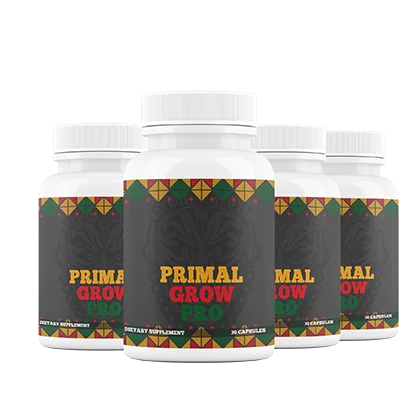
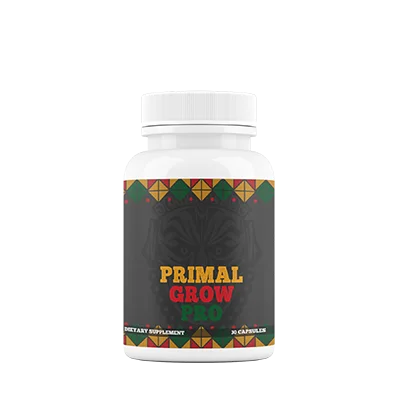
Primal Grow Pro names seven ingredients and prints an amount for none of them. The front of the bottle carries the wordmark, the words “Dietary Supplement”, “30 Capsules” and the standard FDA sentence. There is no ingredient table on the bottle, on either vendor graphic, or on the seller’s own page.
Which of the four scenarios above describes it is therefore unknowable from outside. What can be said is what the arithmetic rules out, and it rules out one thing specifically: this capsule cannot be carrying every one of its seven ingredients at the amount that ingredient’s own research used. The container is not large enough for two of them, let alone seven.
That is not a claim that the formula is ineffective. It is a claim about a container, and it is the reason the ingredients page on this website prints the studied amount beside each name rather than pretending a figure exists for the capsule.
Four questions worth asking any multi-ingredient capsule
- How many ingredients, and what size is the capsule? Divide the second by the first before reading anything else. Fifteen names in a size 0 is an average of forty milligrams each, and almost nothing in this category has been studied at forty milligrams.
- What is the gram-scale ingredient on the list? If any ingredient has a literature measured in grams, and it is one of ten names on a daily capsule, the arithmetic is settled before anything else is considered.
- Are the amounts printed at all? A proprietary blend groups several names under one combined weight. No table at all goes further. Either way, the comparison this article describes becomes impossible.
- Which two ingredients is this formula actually built on? Every blend has an answer to that question. A good label lets you work it out; most do not, and asking the seller directly is the remaining route.
What would change this analysis
- A published certificate with assay figures. One document with seven numbers on it would settle everything above for this particular product.
- A larger capsule. A size 00 holds roughly 700 to 1,000 milligrams, which changes the percentages without changing the conclusion about carnitine.
- A two-capsule serving. Doubling the daily fill doubles the room. Several products in this category do exactly that, and it is a legitimate answer to the problem.
- A shorter ingredient list. Three ingredients at amounts that match their research will always be a better proposition than twelve at amounts that cannot.
- A different question. If what you want is a convenient daily habit rather than a reproduction of a trial, none of the arithmetic above is an objection to anything.
The last of those is worth sitting with. People take a daily capsule for years, find it suits them and are satisfied, and no volume calculation contradicts that. What the calculation does is stop a trial result being transferred onto a bottle that could not be carrying it.
References
- Herrschaft H, Nacu A, Likhachev S, et al. Ginkgo biloba extract EGb 761 in dementia with neuropsychiatric features: a randomised, placebo-controlled trial to confirm the efficacy and safety of a daily dose of 240 mg. J Psychiatr Res. 2012;46(6):716-23. PMID 22459264. https://pubmed.ncbi.nlm.nih.gov/22459264/
- Tiemtad P, Ingkaninan K, Temkitthawon P, et al. Comparative effects of Bacopa monnieri and Ginkgo biloba on cognitive functions: A systematic review and network meta-analysis. Phytomedicine. 2026;153:157915. PMID 41678913. https://pubmed.ncbi.nlm.nih.gov/41678913/
- Cavallini G, Caracciolo S, Vitali G, et al. Carnitine versus androgen administration in the treatment of sexual dysfunction, depressed mood, and fatigue associated with male aging. Urology. 2004;63(4):641-6. PMID 15072869. https://pubmed.ncbi.nlm.nih.gov/15072869/
- Rafii MS, Walsh S, Little JT, et al. A phase II trial of huperzine A in mild to moderate Alzheimer disease. Neurology. 2011;76(16):1389-94. PMID 21502597. https://pubmed.ncbi.nlm.nih.gov/21502597/
- Petre GC, Francini-Pesenti F, Vitagliano A, et al. Dietary Supplements for Erectile Dysfunction: Analysis of Marketed Products, Systematic Review, Meta-Analysis and Rational Use. Nutrients. 2023;15(17):3677. PMID 37686709. https://pubmed.ncbi.nlm.nih.gov/37686709/