Primal Grow Pro Official Website › Blog › Reading A Label With No Amounts
How To Read A Supplement Label With No Amounts On It
A label that names ingredients and prints no weights looks like it is telling you something and is telling you half of something. Here is what can still be worked out, what cannot, and the ten-minute method that gets a reader closest to an answer without leaving their chair.
- There are four kinds of supplement label and only one of them lets you compare a product against research.
- When amounts are absent, the useful move is to look up what each ingredient was STUDIED at, and set that against what a capsule can physically hold.
- A size 0 capsule holds roughly 500 to 800 mg. That single figure does most of the work.
- An ingredient with a gram-scale literature on a once-daily capsule settles the arithmetic before anything else is read.
- Four questions put to a seller in writing will get further than any amount of reading, and the reply is worth keeping whatever it says.
- None of this tells you whether a product works. It tells you how much you are being told.
The four kinds of label
Before anything else, work out which kind of label you are holding. They are not on a spectrum; they are four distinct situations with four different responses.
| What the label does | What a reader can do with it | How common |
|---|---|---|
| Prints every ingredient with its own weight | Compare each row against the research for that ingredient. This is the only arrangement that makes the comparison possible. | A minority of this aisle, and worth seeking out. |
| Groups several ingredients under one blend weight | Know the total and nothing about the split. A blend of six at 500 mg could be 495 mg of one and a milligram of each of the rest. | Very common. The commonest arrangement in this category. |
| Prints ingredient names with no weights at all | Know what is in it and nothing about how much. Everything below is written for this case. | Less common than a proprietary blend, and it is the arrangement on the product this website sells. |
| Prints no ingredient list anywhere | Nothing. This is the case where a buyer should simply move on. | Rare, and a different situation from the one above. |
Four arrangements, in descending order of how much they tell a reader. The third is the subject of this article.
The distinction between the second and third rows is worth dwelling on, because it is often misread. A proprietary blend gives a total and hides the split. A label with no weights at all gives no total, which sounds worse and is in one narrow respect more honest: it makes no attempt to look like a specification.
Neither arrangement lets a reader compare a product against the research behind its ingredients, which is the only comparison that matters.
Why amounts go missing
It is worth understanding the reasons, because they are not all the same and they do not all reflect equally on a seller.
The commercial reason is formula protection: a competitor reading a full breakdown can reproduce the product. This is the reason usually given for proprietary blends and it is a real commercial consideration, whatever a buyer thinks of it.
The second reason is less flattering. A 2023 analysis of twenty-five marketed products in this category placed twenty of them in a cluster it described as having no expected efficacy, characterised as blends of many substances at negligible amounts. A label that printed those amounts would make that visible at a glance.
The third is simpler and more common than either: some sellers do not publish a panel because nobody made them, and the artwork was designed to sell rather than to specify.
A reader cannot tell which reason applies to any given bottle, and it does not much matter. The practical position is the same in all three cases.
The substitution method, in five rows
Here is the technique. If a label will not tell you how much of an ingredient is in a capsule, look up how much of it was used in the research that gave the ingredient its reputation. That figure is public, it is usually easy to find, and it converts a name into something a reader can reason about.
| Ingredient on a list | What to look up | What the answer tells you |
|---|---|---|
| Ginkgo biloba | The daily amount its trials used: 240 mg | That roughly 37% of a size 0 capsule would be needed for this row alone. |
| Bacopa monnieri | 300 mg is the floor, 600 mg is the arm that separated from placebo | That the useful amount is nearly a whole capsule by itself. |
| L-carnitine | 4 grams a day in the one trial that fits this use | That no once-daily capsule of any size can carry the researched amount. |
| Huperzine | 200 to 400 micrograms twice daily | That this one fits easily, several hundred times over. Not every answer is bad news. |
| Any ingredient you cannot find a trial for | Search the ingredient name with the outcome the product claims | An empty result is information. It means the name is doing marketing work rather than pharmacological work. |
The method in five rows. It takes about ten minutes for a whole ingredient list and it is the closest thing to a substitute for printed amounts.
The last row is the one people skip and it is frequently the most informative. An ingredient with no trial for the outcome the product claims is doing a different job from the one the front of the bottle implies, and an empty search result is a finding rather than a failure to find.
A 2026 network meta-analysis is a good example of how useful the published thresholds can be: it defines high-dose bacopa as 600 mg a day or more and high-dose ginkgo as 240 mg a day or more, and reports that only the high-dose bacopa arm separated from placebo. Two numbers, straight out of a paper, and between them they frame a whole ingredient row.
The one number that does most of the work
The shell a botanical blend usually arrives in takes somewhere between five hundred and eight hundred milligrams of powder. That figure belongs to the container rather than to any product, and it is public.
Set it against the figures from the substitution method and most questions answer themselves. Ginkgo at 240 mg is 37 per cent of a 650 mg fill. Bacopa at 600 mg is 92 per cent. Both together exceed the container.
The carnitine trial in men aged 60 to 74 used four grams a day of two carnitines for six months. Four grams is six capsules of pure carnitine. Any once-daily multi-ingredient capsule carrying that ingredient is carrying it at a small fraction of what that trial used, and no label is required to say so.
This is arithmetic rather than accusation, and a reader who does it once will do it instinctively thereafter.
Check the seller against itself
This step costs two minutes and catches things nothing else does. Compare every place the seller states its own ingredient list, and see whether they agree.
The bottle, the sales page, any ingredient graphic, any FAQ. They should name the same things. Where they do not, the seller’s own materials are disagreeing about what is in the product, and no amount of reading resolves that from outside.
On the product this website sells, the two vendor ingredient graphics name six ingredients each and it is not the same six. One omits huperzine and the other omits St. John’s wort, while the written copy names all seven. That discrepancy is set out once on the ingredients page, and it is exactly the kind of thing this two-minute check is for.
The same check applies to review copy and the checkout. If reviews describe buying a quantity the checkout does not sell, the sales material and the shop have drifted apart, which is worth knowing before an order rather than after.
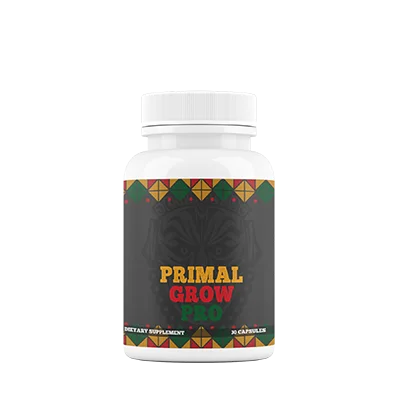
See the method applied to Primal Grow Pro
Seven named ingredients, no printed amounts, and the daily figure each one's own trials used set beside the blank the label leaves.
One bottle $69 · four bottles $196 · 60-day money-back guarantee
Order Primal Grow Pro On The Official WebsiteOne capsule a day · 30 per bottle · lot PRI-26/TH-6374
Four questions worth asking in writing
Reading gets a buyer some of the way. Asking gets them further, and the reply is worth keeping whatever it says, because a seller that answers in writing has told you more than any badge wall will.
- How much of each ingredient is in a serving? The direct question. A refusal is an answer of a kind, and a number is a declaration you can hold on to.
- What is the capsule shell made from? One sentence to answer, and it decides whether any vegetarian or dairy-free mark on the pack means anything.
- Which extract or standardisation is used for each botanical? Ginkgo research runs almost entirely on one standardised extract. A name without a form leaves the most important variable open.
- Is there a certificate of analysis with assay figures, and can I read it? A reference number is not a document. Ask for the document.
Send them to whatever order desk the seller publishes, and ask for the answers in writing rather than over the telephone. The NCCIH's general guidance makes the same point about asking questions before buying, in broader terms, and is worth five minutes.
How to decide, once you have all of it
- If the arithmetic rules out the headline ingredient at its research amount, decide whether you want the product as a maintenance formula rather than as a reproduction of a trial. Both are legitimate; they are different purchases.
- If the seller answers the four questions, that is a meaningful signal about conduct even when the answers are unflattering.
- If the seller answers none of them, weigh the product on the things that can be checked: the refund window, the route to a human being, and how the price is presented.
- If an ingredient carries a documented interaction, that decides the question before any of the above matters.
- Buy the smallest pack first, whatever you conclude. A refund window is the one part of a sales page that can be tested, and the smallest pack is the cheapest way to test it.
What this method cannot do
Three limits, stated plainly, because a method presented without them would be overselling itself.
It cannot tell you whether a product works. A perfectly transparent label can sit on a perfectly useless formula and describe it in complete detail.
It cannot tell you whether what is printed is what is inside. An analysis of 23 supplements carrying one particular ingredient found quantities ranging over a hundredfold and six bottles containing none of it at all. A printed number is a declaration made at manufacture rather than a measurement of what you hold.
And it cannot substitute for the thing a label genuinely should carry. Everything above is a workaround. It gets a reader closer than reading a front label and no closer than a real certificate would, which is why the fourth question in the list above is the one worth pressing hardest.
References
- Petre GC, Francini-Pesenti F, Vitagliano A, et al. Dietary Supplements for Erectile Dysfunction: Analysis of Marketed Products, Systematic Review, Meta-Analysis and Rational Use. Nutrients. 2023;15(17):3677. PMID 37686709. https://pubmed.ncbi.nlm.nih.gov/37686709/
- Avula B, Chittiboyina AG, Sagi S, et al. Identification and quantification of vinpocetine and picamilon in dietary supplements sold in the United States. Drug Test Anal. 2016;8(3-4):334-43. PMID 26426301. https://pubmed.ncbi.nlm.nih.gov/26426301/
- Tiemtad P, Ingkaninan K, Temkitthawon P, et al. Comparative effects of Bacopa monnieri and Ginkgo biloba on cognitive functions: A systematic review and network meta-analysis. Phytomedicine. 2026;153:157915. PMID 41678913. https://pubmed.ncbi.nlm.nih.gov/41678913/
- Cavallini G, Caracciolo S, Vitali G, et al. Carnitine versus androgen administration in the treatment of sexual dysfunction, depressed mood, and fatigue associated with male aging. Urology. 2004;63(4):641-6. PMID 15072869. https://pubmed.ncbi.nlm.nih.gov/15072869/
- Using Dietary Supplements Wisely. National Center for Complementary and Integrative Health, National Institutes of Health. https://www.nccih.nih.gov/health/using-dietary-supplements-wisely